Someone left a comment on one of my videos a few months ago that I still think about. "Someone told me Edinburgh is dog friendly. I'll never know." She lives in Spain with her dog. She can fly to Dublin, to Paris, to Malta, to anywhere in Europe with him under the seat. She cannot fly into Edinburgh, or Heathrow, or Manchester, because the UK doesn't allow a pet dog to arrive in the cabin of a commercial flight. Assistance dogs only. Everyone else's dog goes as cargo, on its own air waybill, through a cargo agent, and is collected from an animal reception centre rather than the arrivals hall.
For UK dog owners it works the other way round. You can get out, which I've covered in flying your dog out of the UK. You just can't fly back. So the trip home is a car, a tunnel or a boat, and this post is the whole of that. I've done one of these crossings myself, France to Ireland with Daisy and the car on Stena Line, and the rest I've gone through operator by operator on their own websites, with the government rules from gov.uk, all read on 10 September 2026. Where a company doesn't publish a price, I say so rather than guess.

First, What the UK Wants From Your Dog on the Way In
Three things, and the third one is the one that goes wrong.
Your dog needs a valid document. If you live in Great Britain, that's the Animal Health Certificate you got before you left, and it's good for coming home as long as it's less than 6 months since you entered the EU. That 6 months is what gov.uk says today, on two separate pages. It used to be 4, and most guides still say 4, so read the live page. If you've been away longer than that you need a Great Britain pet health certificate from a vet abroad instead. If your dog is an EU dog with an EU pet passport, that works too, as long as the rabies entry was made by an EU vet and every box is filled in properly.
Your dog needs a microchip and an in-date rabies vaccination, with the chip fitted before the jab, and at least 21 days since a first vaccination.
And your dog needs a tapeworm treatment, given by a vet, no less than 24 hours and no more than 120 hours before you arrive in Great Britain. The vet writes the product, the date and the exact time into the document, stamps it and signs it. The product has to contain praziquantel. Miss the window and gov.uk's wording is that your dog can be refused entry or put into quarantine. In practice, on a ferry or the tunnel, you're turned away at the French port before you board, because it's the operator that checks, not the government. More on that in a minute.
You're exempt from the tapeworm rule if you're coming directly from Ireland, Northern Ireland, Malta, Finland or Norway. Everywhere else, it applies.
The Tapeworm Clock
This is the bit to get right, because it's the only part with a timer on it. The window is 24 to 120 hours before your arrival time in Great Britain. Not your departure time. Arrival.
So if you're on a 10am LeShuttle from Calais on Saturday, the treatment has to be given after 10am on the Thursday before and before 10am on the Monday before. A vet appointment on the Wednesday of that week is inside the window. The Tuesday is not. Book the vet abroad for two or three days before you sail, ask them to write the time on it, and keep the receipt.
For a short trip there's a trick that gov.uk itself describes. Have the treatment done in the UK before you leave, wait 24 hours, and come back within 5 days. It only works for a weekend away, but it means no foreign vet at all.
Who Actually Checks
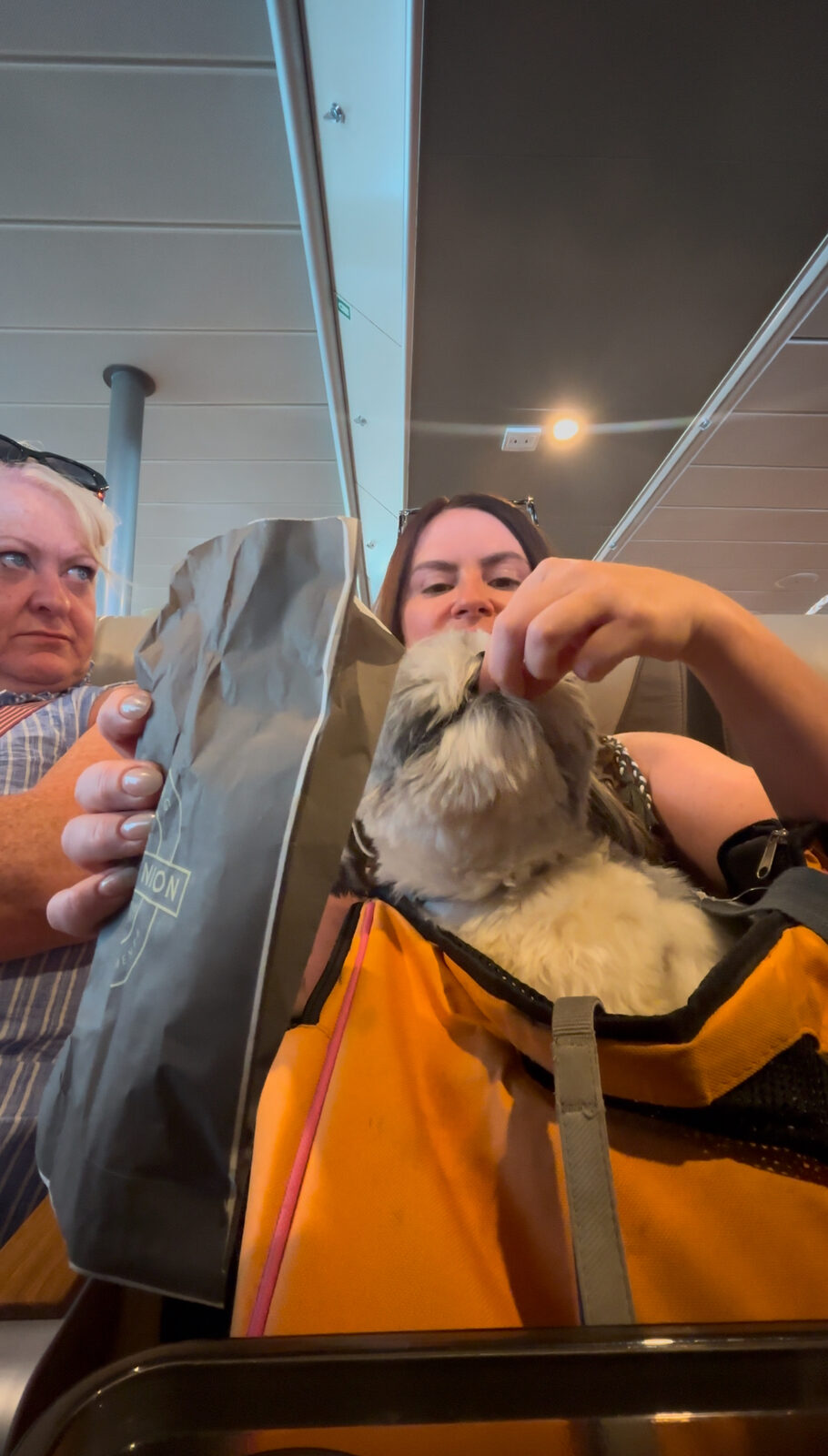
Nobody from the British government meets you at Dover. The government's guidance for carriers, last updated in May 2026, is that the ferry operator or Eurotunnel must check your pet at the port of departure outside Great Britain. Their staff scan the chip, read the document and check the tapeworm time before you're allowed to board. If it's wrong, you don't board. That's why Brittany Ferries, P&O and the others all want you at check-in 90 minutes early with a dog.
The only exceptions are pets coming from Ireland, Northern Ireland, the Channel Islands and the Isle of Man, which is why the Dublin route further down is interesting.
You Can Only Use an Approved Route
Gov.uk keeps a list of approved sea and rail routes into England and Scotland, updated on 4 September 2026, and a line on it I hadn't expected. There are no approved routes to Wales. None. The Irish Sea crossings into Holyhead, Fishguard and Pembroke work because Ireland is exempt from the approved-route rule, not because they're approved.
From France the approved routes are Calais to Dover with DFDS, Irish Ferries and P&O, Dunkirk to Dover with DFDS, Dieppe to Newhaven with DFDS, Caen, Cherbourg, Le Havre, Roscoff and St Malo into Portsmouth, Poole and Plymouth with Brittany Ferries, St Malo with Condor, and the Calais to Folkestone LeShuttle. From the Netherlands, Hook of Holland to Harwich with Stena Line, Rotterdam to Hull with P&O, and Amsterdam to Newcastle with DFDS. From Spain, Bilbao and Santander to Portsmouth and Santander to Plymouth with Brittany Ferries.
Eurostar is on the list, and Eurostar does not carry pet dogs to or from London. Assistance dogs only. So ignore it.
LeShuttle, the Easy One
If you've got a car and you're anywhere near Calais, this is the answer. Your dog stays in the car with you for the 35-minute crossing. There's a drive-through Pet Reception at the Calais terminal, open around the clock, where they scan the chip and check the paperwork in a few minutes. LeShuttle says to check the pet in at least an hour before your departure and no more than two hours, though another of their pages says 90 minutes, so aim for 90 and you're right either way. You can book up to five pets on a car, and you add them when you book online or to an existing booking.
The fee is from £24 per pet each way. That's the only crossing where the price is printed on the website, which tells you something about the ferries.
There's an exercise area with artificial grass at Calais, and one behind the fuel garage when you drive off at Folkestone. That's it. No cabin, no kennel, no leaving the dog anywhere. For a small dog who's happy in the car, it is the least stressful way into the UK that exists.
The Ferries, One by One
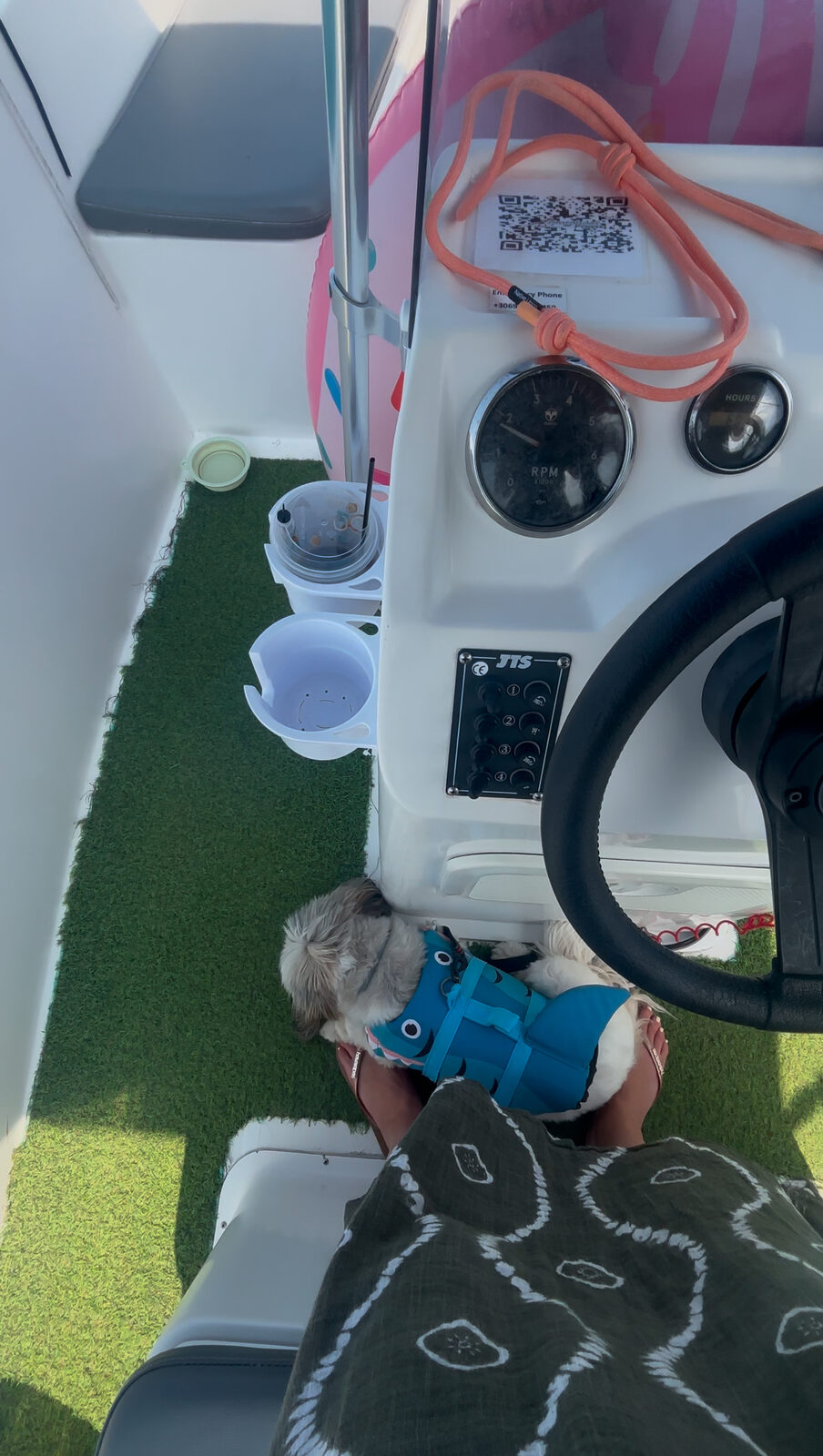
Every ferry operator says the same thing in different words. Space for pets is limited, especially in summer, and you book the dog when you book the crossing. What differs is where the dog is allowed to be during the crossing, and whether you can see her.
Brittany Ferries
Three options on most ships. The dog stays in your car, the dog goes in a kennel, or you book a pet-friendly cabin. Which of those you get depends on the ship and the route. On the short and overnight French crossings the dog can stay in the car or come to a pet cabin. To and from Spain, which is a long crossing, the dog cannot stay in the car and has to be in a pet cabin or a kennel.
The rules once on board are strict. The dog stays in whatever accommodation you booked. Not in the bars, not in the restaurants, not in a normal cabin. Kennel dogs are allowed in the kennel and the exercise area. Cabin dogs are allowed in the cabin and the exercise area. Moving between the two, the dog is muzzled and on a lead, and you're asked to bring a muzzle for the port as well.
If the dog is in the car, you can visit. One person, fifteen minutes, at times the information desk gives you, weather permitting, and the captain can cancel visits. On Pont-Aven the kennels are open to you at all times with a swipe card.
No foot passengers with pets, no motorbikes, no bicycles. Maximum five pets per car. Check in 90 minutes before departure. Brittany Ferries also runs a free online pet document pre-check, which you email 96 hours before you sail and they tell you whether the paperwork is valid. Do that. It's the closest thing to a rehearsal.
Fees are not published anywhere on the site. They only appear once you're inside the booking engine, so I can't tell you what a pet cabin costs, and I'd rather say that than guess.
DFDS
Calais and Dunkirk to Dover, the dog stays in the car, and DFDS says you cannot currently visit during the crossing. It's a 90-minute sailing, so for a settled dog that's fine, and for a dog that panics in a car alone it isn't. Dieppe to Newhaven is the same in the car, with kennels and new pet cabins for foot passengers, though gov.uk's approved list doesn't mark Newhaven as a foot-passenger pet route, so ring DFDS before relying on that.
Amsterdam to Newcastle is the overnight one and the nicest of the DFDS options. Pet-friendly cabins with vinyl floors where the dog stays with you the whole night, up to two medium dogs per cabin, and outdoor dog areas open for most of the crossing. Booking for a pet cabin is by phone. Fees aren't published.
P&O Ferries
Calais to Dover, the dog stays in the car unless you've booked the Pet Lounge, which is a seating area for you and your dog with its own bit of deck. Foot passengers can book the lounge. Maximum five pets, check in 90 minutes early, and P&O won't carry the UK's banned breeds. The lounge was free on a promotion last summer and the current price isn't on the site.
Rotterdam to Hull is overnight, the dog can't stay in the car, and it's kennels in three sizes up to 45 kilos or a pet-friendly cabin. This is the only route gov.uk specifically flags as approved for pets travelling with foot passengers, which matters if you're coming back from the Netherlands without a car.
Stena Line
Hook of Holland to Harwich has fifteen pet cabins on each of Stena Britannica and Stena Hollandica, with a pet area on deck close by, plus heated kennels in three sizes you can visit, or the car. Foot passengers can bring a dog as long as they book a pet cabin. Two Stena pages used to disagree about whether the cabins existed on this route and they do, which matters more than it sounds, because this is the crossing that makes the no-car route home work.
I've sailed Stena myself, France to Ireland, and my Stena Line review is honest about it. The pet area was good. The inside cabin vibrated and banged all night. Three stars, and we'd pick Brittany Ferries or Irish Ferries first next time.
Irish Ferries
Dover to Calais, the dog stays in the car or you book the Pet Den, which is a lounge with seating for you and an outdoor walkway for the dog. An adult stays with the dog for the whole crossing, on a lead or in a carrier. Five pets per booking, check-in 90 minutes early.
Cherbourg to Dublin or Rosslare is where Irish Ferries gets useful, and I'll come back to that.
Condor Ferries
St Malo to Poole or Portsmouth, £20 per pet each way in the car, and pet cabins on Condor Islander and Commodore Clipper taking up to two pets. No foot passengers with pets on the France routes. Along with LeShuttle it's the only other operator that prints the price.
If You Flew Out, You Don't Have a Car
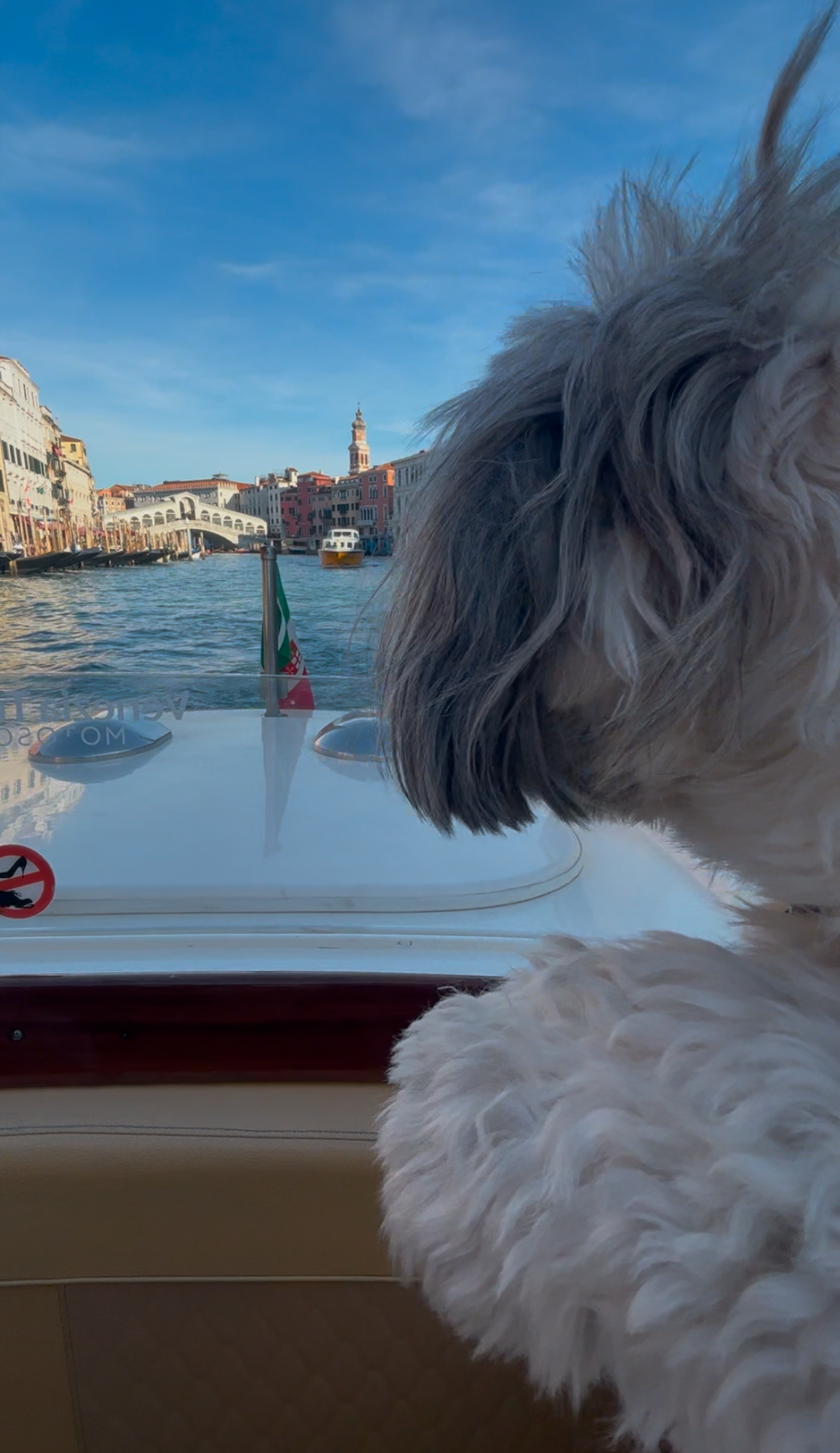
Almost everything above this line assumes a car, and that's the wrong assumption for a lot of you. If you flew out of the UK with your dog in the cabin, you flew. There's no car waiting in Calais.
Only eight of the nineteen crossings I went through will carry a foot passenger with a dog at all. Of those, the question stops being which boat and becomes which airport puts you on one without a taxi.
The answer is Amsterdam, and it comes down to one detail.
Schiphol to the Boat, on Foot
The metro station at Hoek van Holland is across the street from the Stena Line hall. Not a shuttle, not a transfer bus, across the street. So the dog walks off a train and into a ferry terminal on its own four feet, which is the whole game.
Here's the run:
- Fly into Schiphol with an airline that takes a cabin dog. KLM does, from most of Europe, and it's the one I'd book.
- NS intercity from Schiphol to Rotterdam Centraal.
- Metro line B from Rotterdam out to Hoek van Holland Haven. Every 20 minutes.
- Walk into the Stena Line hall and sail to Harwich. Six and a half to eight hours. Book a pet cabin.
- Greater Anglia from Harwich International into London Liverpool Street.
On Dutch public transport your dog is free on the metro, on a short lead, and not on the seats. On the NS train a small dog in a bag, a basket or on your lap is free, and a bigger dog needs a Day Ticket Dog, whose price isn't printed on the page, so buy it at the machine. On the UK side, up to two dogs travel free on the train, on a lead or in a carrier, and not on the seats.
Why Not Paris
Paris can be made to work. It's just worse in the one place that counts. Every Channel crossing that takes a foot passenger with a dog needs a shuttle at some point, and a shuttle means your dog in a carrier on a bus, on a lead you can't let out, for an hour at the end of a travel day. Daisy would have a complete fit, and I'd be the one apologising to a coach full of people.
The Dutch route has no bus in it. That's the difference.
Two Things That Will Catch You Out
Pet cabins are few and they sell out months ahead in summer. Fifteen per ship sounds like plenty until you're looking at a Saturday in July. Book the cabin at the same moment you book the crossing, not after.
And the tapeworm tablet is timed off the sailing, not the flight. It has to be given 24 to 120 hours before you arrive in Great Britain. If you fly Monday and sail Thursday, the vet appointment is Tuesday or Wednesday, not the day you leave. Get that wrong and you're turned away at the port, which is the single most expensive mistake on this whole page.
The Other Dutch Boats
DFDS runs Amsterdam IJmuiden to Newcastle overnight with pet cabins and a dog deck, and it takes foot passengers, by phone. It's a lovely crossing. IJmuiden has no railway station though, so the connection from Amsterdam is by road, and I haven't checked what that looks like with a dog, so I'm not going to tell you it's fine.
P&O Rotterdam to Hull is the only route gov.uk specifically marks as approved for pets with foot passengers, which is worth knowing. But it's six cabins per ship on a first come first served basis, and if you miss one it's a kennel you can't visit until morning. Europoort is a road connection too. Take it as a backup, not a plan.
The Dublin Back Door
Here's the route I'm asked about most, because it's the one that lets you fly. The UK ban is on pets arriving by air. Ireland has no such ban. Daisy has flown into Dublin many times, and Dublin Airport does it beautifully, a couple of minutes with the Department of Agriculture and you're out.
So a UK dog owner can fly home in the cabin to Dublin on KLM, Aegean, Air France, TAP or any EU airline that carries pets into Ireland, then drive or foot-passenger it onto the Dublin to Holyhead ferry with Stena Line or Irish Ferries. Kennels are free on those crossings, pet cabins exist on some ships, and the Pet Den on Irish Ferries is open to foot passengers.
Two things to know. Flying into Ireland, your dog needs the tapeworm treatment for Ireland, 24 to 120 hours before landing in Dublin, and you have to give advance notice to the Department of Agriculture and email them so someone meets the flight. That's in my flying to Dublin with a dog post, along with the reason it can't be Lufthansa. Then, from Ireland into Great Britain, gov.uk says you don't need an approved route, you don't need a tapeworm treatment, and the operator isn't required to run the pre-boarding checks it runs in Calais.
What gov.uk does not say is that the dog needs no document at all. Ireland isn't on the list of places, like Northern Ireland or the Isle of Man, that are exempt from paperwork. So carry the AHC or the EU passport as if someone will ask. In my experience nobody has, but I'd rather tell you what the page says than what usually happens.
Coming Back From Spain or Portugal
If you drove down, Brittany Ferries from Bilbao or Santander to Portsmouth or Plymouth is the direct answer. It's a long crossing, the dog is in a pet cabin or a kennel, not the car, and space sells out in summer months. If you flew out, it's the Dublin route or a one-way car hire to the Channel, and the Dublin route is easier than it sounds.
The Campaign to Fly Home in the Cabin
If you're reading this because you'd rather just fly, so would I. Nearly 20,000 people signed the Parliament petition asking the government to let small dogs fly into the UK in the cabin. It closed on 2 August 2026 with 19,853 signatures, short of the 100,000 needed for a debate.
DEFRA's response, published on 13 May 2026, didn't point to rabies data or a risk assessment. It said pets have to travel in the hold so they can be taken to a pet checking facility that's separate from the passenger terminals. That's an airport logistics problem. Assistance dogs already fly into the UK in the cabin and get checked, and Ireland checks cabin dogs in the arrivals hall.
The petition's closed, but your MP's inbox isn't. A letter from a constituent gets logged and answered, and enough of them get the issue raised in Parliament. There's a ready-to-send letter in our open letter to DEFRA, updated with the government's response. And when the next election comes round, ask every candidate who wants your vote where they stand on it.
Until then, the routes above are how you get home.
The Plan, in Order
Book the crossing and the pet space on the same day, because pet cabins and kennels sell out before the car deck does. Work out your arrival time in Great Britain and count back 24 to 120 hours for the tapeworm appointment. Book a vet abroad in that window, two or three days before you sail is safe, and make sure they write the time. Do the Brittany Ferries pre-check if it's Brittany. Get to the port 90 minutes early with the originals, not photocopies. Muzzle in the glovebox for the operators that ask. And if the dates go wrong and you slip past 120 hours, it's a new treatment and a new vet, not a fine, but it is a missed boat.

Would Daisy Come Back This Way?
Only if the alternative was cargo. For a small dog and a car, LeShuttle at £24 with the dog in the back seat is as painless as travel gets, and if I lived in the south of England that's what I'd do every time. Anything overnight, I'd pay for the pet cabin rather than the kennel and I'd ask about the vibration before choosing an inside cabin, because I've made that mistake once already.
And if there's a ferry pet cabin you've actually slept in and loved, or hated, tell me which one. That's how this list gets better.